Can You Pour Concrete in Winter in the Dayton Area? Cold-Weather Facts
As the autumn chill rolls into Ohio, property owners often worry that their construction window has closed for the year. If you are wondering about pouring concrete in winter in the Dayton area, the short answer is yes, but it requires strict adherence to specialized safeguarding steps. Winter pours happen successfully across the Miami Valley every year. The difference between a slab that lasts decades and one that flakes apart by spring comes down to temperature control, timing, and the experience of the crew doing the work.
This guide walks you through what actually happens to concrete in cold weather, the industry rules that protect your investment, what winter work costs, and how to decide whether to pour now or wait until spring.
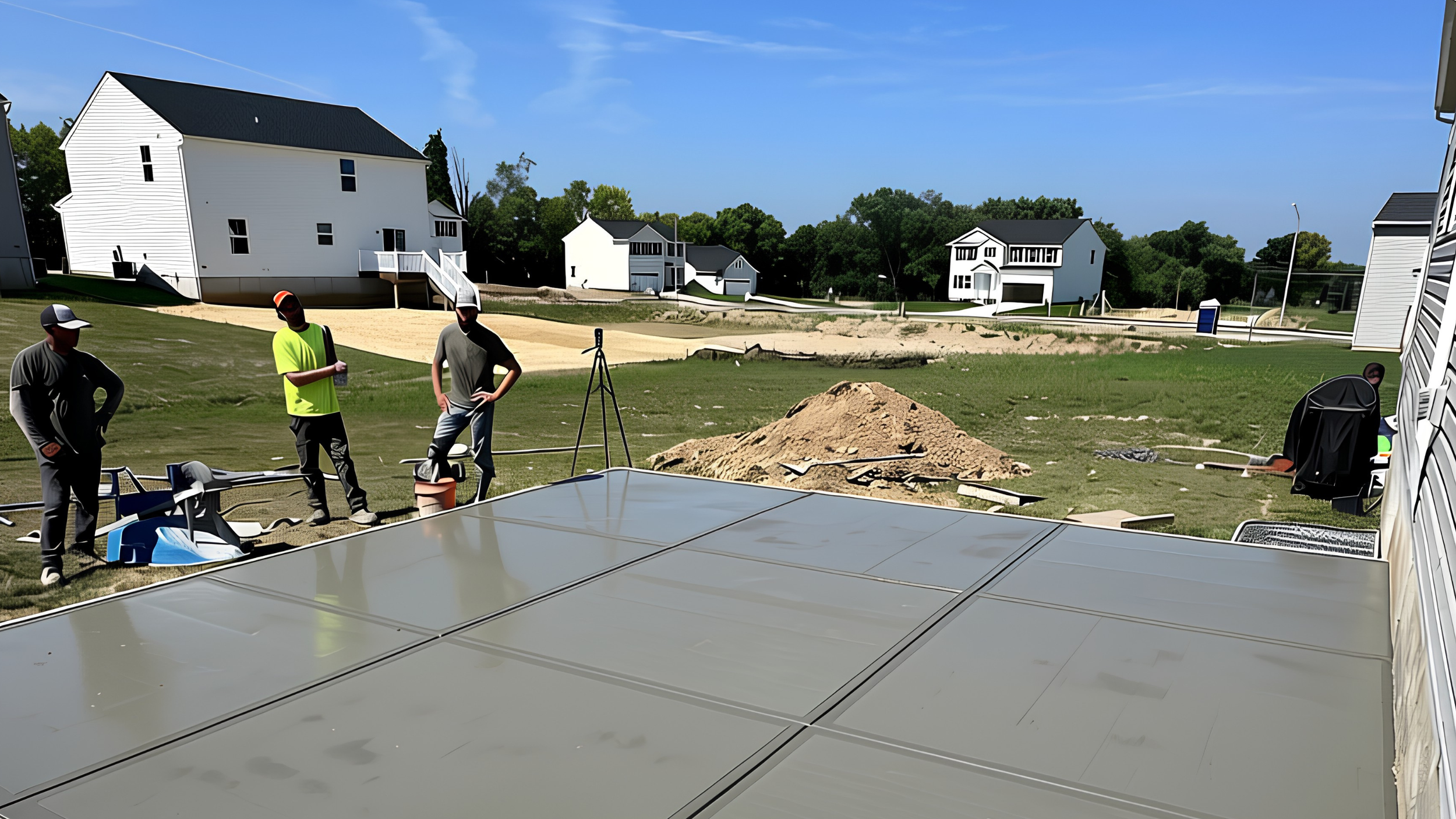
Can You Really Pour Concrete in Winter Around Dayton?
Yes. Concrete can be placed year-round in the Dayton area, including during December, January, and February. Contractors do it regularly for driveways, garage slabs, footings, and repairs that cannot wait for warmer months.
The catch is that cold weather changes the rules. Fresh concrete gains its strength through a chemical reaction called hydration, and that reaction slows down dramatically as temperatures drop. Below a certain point it can stop almost entirely. Worse, if the water inside fresh concrete freezes before the slab is strong enough, the expanding ice can crack the internal structure and permanently weaken it.
So the real question is not "can you pour concrete in winter" but "can you protect it properly while it cures." With the right methods, the answer around Dayton is a confident yes.
Why Dayton Winters Make Concrete Work Harder
Dayton sits in a humid continental climate with genuinely cold, snowy winters, and that matters for anyone planning a pour. January is the coldest month, with an average high near 37F and an average low around 20F. December and February are only slightly milder. Overnight temperatures routinely dip below freezing from December through February, and the region averages roughly 14 inches of snow across the season, with January alone bringing the most.
Two things about this local pattern create real risk for fresh concrete:
First, the daily swing. A Dayton winter day might reach the upper 30s by afternoon and then plunge into the teens overnight. Concrete does not care about the pleasant afternoon; it cares about that overnight low hitting the slab before it has gained enough strength to resist freezing.
Second, freeze-thaw cycling. The Miami Valley crosses the freezing mark back and forth many times each winter. Every time water in or under a slab freezes and thaws, it expands and contracts. A slab that was not cured correctly, or that sits on a poorly prepared base, will show that stress quickly through scaling, spalling, and cracking.
This is exactly why local experience matters more in winter than in any other season. A crew that understands Dayton's specific temperature behavior plans the pour around the overnight lows, not the daytime highs.
The 40F and Rising Rule Every Homeowner Should Know
The concrete industry has a clear definition of cold-weather conditions, and it comes from the American Concrete Institute standard known as ACI 306. Under the current guidance, cold-weather concreting practices apply whenever the air temperature has dropped to, or is expected to drop below, 40F during what is called the protection period.
In plain terms, contractors follow a "40F and rising" guideline. They want the temperature at and after placement to be at or climbing above 40F so the slab has a fair chance to cure. If the forecast shows the air falling below 40F while the concrete is still young, cold-weather protection measures become mandatory rather than optional.
The protection period is the stretch of time, usually the first several days after placement, when the slab is most vulnerable. During this window the concrete needs to stay warm enough to keep hydrating and, critically, must not be allowed to freeze. The Portland Cement Association notes that concrete generally needs to reach a minimum strength of about 500 psi before it can safely resist the expansive force of freezing water. Reaching that strength in cold weather takes deliberate temperature management.
This is the single most important fact for a homeowner to understand: in winter, curing is not automatic. It has to be actively protected
What Actually Goes Wrong When Concrete Gets Too Cold
When fresh concrete is not protected in cold weather, the damage tends to show up in predictable ways. Knowing these helps you recognize a job that was rushed or handled by an inexperienced crew.
Early-age freezing. If the water in the mix freezes before the slab reaches adequate strength, ice crystals disrupt the internal structure. The concrete may look fine at first but can lose a large share of its potential strength permanently.
Surface scaling and flaking. The top layer peels or flakes away, often appearing the following spring after the first hard freeze-thaw cycles. This is one of the most common signs of a poorly protected winter pour.
Slow or stalled strength gain. Cold slows hydration. A slab that would normally support foot traffic in a day or two might take much longer, which extends the protection period and delays when you can use the surface.
Cracking from thermal shock. If a warm slab is suddenly exposed to frigid air because protection was removed too early, the rapid temperature change can crack it.
The reassuring part is that every one of these problems is preventable. They come from skipped steps, not from winter itself.
How Professionals Protect a Winter Pour in the Dayton Area
Experienced contractors use a layered set of methods to keep a slab warm and curing through Dayton's cold stretches. The best pouring concrete in winter Dayton area strategies always involve tracking the 40F and rising rule and controlling the core temperature during the critical initial cure. Here is what that looks like on a real job site.
Thermal insulation blankets. Heavy insulating blankets are laid over the fresh slab to trap the heat that concrete naturally gives off as it cures. This is the workhorse method for most residential winter pours in the region.
Insulated forms and ground thawing. The ground itself must not be frozen when concrete is placed. Crews may thaw the subgrade with heaters or coverings first, then use insulated forms to protect the slab edges, which lose heat fastest.
Heated enclosures. For larger or more sensitive projects, a temporary enclosure with heaters keeps the whole work area above the danger zone during placement and early curing.
Warmer concrete and mix adjustments. The concrete can be delivered at a higher temperature, and accelerating admixtures can be added to speed up early strength gain so the slab reaches safe strength faster. Air-entrained concrete, which contains tiny air bubbles that give freezing water room to expand, improves long-term freeze-thaw durability and is standard for exterior flatwork in Ohio.
Temperature monitoring. Good crews monitor the concrete temperature, not just the air temperature, throughout the protection period and keep the blankets or heat in place until the slab has gained enough strength.
Proper base preparation. None of this works over a bad base. Excavation to the correct depth, a compacted gravel base, and drainage grading protect the slab against seasonal ground movement and freeze-thaw pressure from below. This step matters in every season, but winter is where a weak base fails first.
Winter Concrete Costs: What to Expect
Winter work generally costs more than a spring or summer pour, and it helps to understand why so the estimate makes sense.
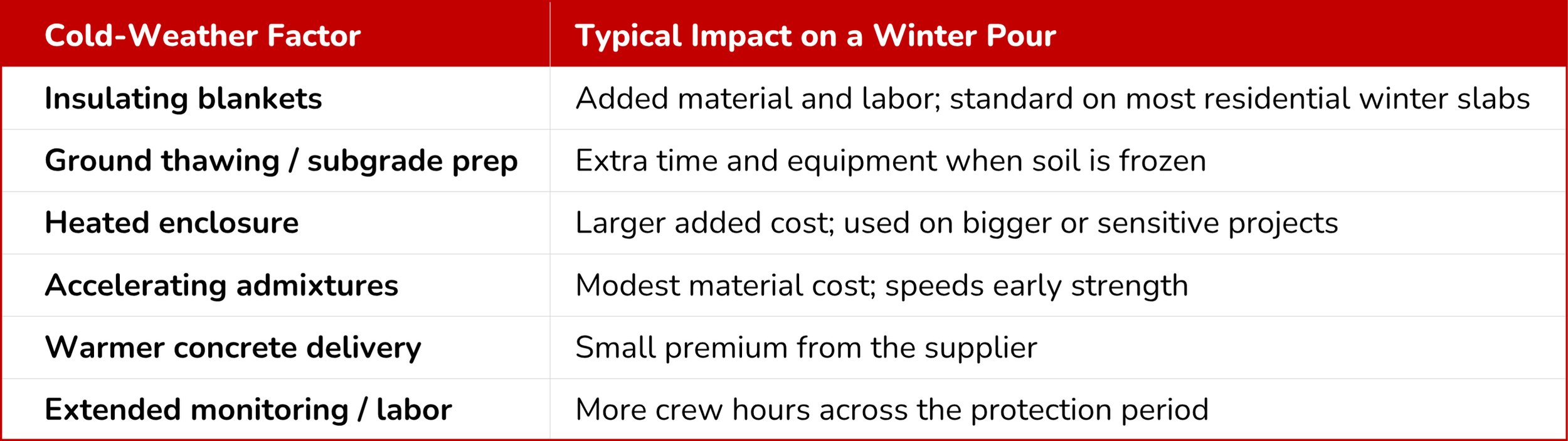
The added cost comes from the protection itself: insulation blankets, ground thawing, heated enclosures, admixtures, warmer concrete, and the extra labor and time to monitor and maintain temperature through the protection period. These are not upsells; they are the safeguards that keep your slab from failing.
Here is a general picture of how cold-weather factors affect a residential project. Actual numbers depend on size, access, design, and site conditions, so treat these as planning ranges rather than quotes.
If cost is a major concern and the project is not urgent, waiting for spring may save money. But that has to be weighed against the cost of leaving a failing surface in place through another winter, which we cover below.
Should You Pour Now or Wait Until Spring?
There is no single right answer, and an honest contractor will help you weigh it rather than push you either way. A few questions usually settle it.
Is the project urgent? A cracked, sinking, or unsafe driveway or slab often should not wait. Water gets into cracks, freezes, expands, and makes the damage worse over the winter. Replacing a failing surface before the worst of the freeze-thaw season can prevent a bigger repair bill later.
Is the timing flexible? If you are planning a cosmetic upgrade or a new patio you will not use until spring anyway, waiting for milder weather is often the simpler and more economical choice.
How is the forecast shaping up? Dayton winters have milder stretches. Contractors watch for windows where the 40F and rising conditions can be met, and sometimes a well-timed late-fall or mid-winter thaw is a perfectly good time to pour with proper protection.
Do you want to be ahead of the spring rush? Spring and early fall are the busiest seasons for concrete crews in Ohio. Booking a protected winter pour, or at least scheduling early, can mean shorter lead times and more control over your timeline.
For a fuller look at how each season compares for a driveway specifically, our guide on the best time of year to pour a concrete driveway in Ohio breaks down the tradeoffs across spring, summer, fall, and winter.
Why Local Experience Matters More in Winter
Winter is the season that separates careful contractors from careless ones. A summer pour is forgiving; a winter pour punishes shortcuts. The crew has to read Dayton's overnight lows, prep the ground so it is not frozen, protect the slab for the full protection period, and monitor temperature rather than guessing.
Cardinal Concrete is a family-owned company based in Vandalia, Ohio, serving the Greater Dayton area, and cold-weather work is part of what we plan for every year. We prepare the base correctly, protect the pour with the right combination of blankets, heat, and mix adjustments, and hold that protection until the slab has the strength to handle an Ohio winter. That is how a driveway or slab poured in January still looks right years later.
If you are weighing a winter project, whether it is a driveway, a garage slab, steps, or a repair that cannot wait, we are glad to look at your specific situation and give you a straight answer about timing.
Frequently Asked Questions
-
It can, but only with active protection. The concrete must be kept from freezing during the protection period using methods like insulating blankets, heated enclosures, warmer concrete, and admixtures. The ground also must be thawed before placement. Below-freezing pours are a job for an experienced crew, not a do-it-yourself weekend.
-
There is no single hard number, because it depends on protection. The industry guideline from ACI 306 is that cold-weather practices apply once the air is at or expected to fall below 40F during curing. With proper measures, contractors pour well below that. Without them, even a night in the 30s can damage a fresh slab.
-
Longer than in warm weather. Cold slows the hydration reaction, so a slab that might handle light foot traffic in a day or two during summer can take noticeably longer in winter. This is why the protection period is extended and the blankets or heat stay in place until the concrete reaches adequate strength.
-
Not if it is protected correctly. A properly protected winter pour can reach the same strength and durability as a summer pour. The weakness only shows up when the slab is allowed to freeze early or when protection is removed too soon.
-
Usually yes. The added cost covers protection: blankets, ground thawing, heated enclosures, admixtures, warmer concrete, and extended labor to monitor temperature. Those safeguards are what make a winter pour last, so they are worth budgeting for if the project cannot wait.
Ready to Plan Your Winter Concrete Project?
Pouring concrete in winter in the Dayton area is absolutely possible, but it lives or dies on protection, timing, and experience. The 40F and rising rule, careful base prep, thermal blankets, and steady temperature monitoring are what turn a cold-weather pour into a slab that lasts for decades.
If you have a driveway, slab, or repair you are thinking about, the team at Cardinal Concrete can tell you whether to pour now or wait, and handle the cold-weather details either way. Call or text 937-475-1447, or reach out through our contact form for a free estimate built around Dayton's real winter conditions.