Best Time of Year to Pour a Concrete Driveway in Ohio
Planning a new concrete driveway involves more than choosing the finish or comparing prices. Timing also plays a major role in how well the concrete performs long-term.
In Ohio, changing temperatures, moisture, and seasonal weather patterns can directly affect installation conditions and curing. While concrete can technically be poured during much of the year, some seasons create better conditions than others.
This guide explains the best time of year to pour a concrete driveway in Ohio, how weather affects concrete, and what homeowners should consider before scheduling a project.

Why Timing Matters for Concrete Installation
Concrete does not simply dry after it is poured. It goes through a curing process where moisture and temperature help the material gain strength over time.
If conditions are too hot, too cold, or too wet, curing can be affected. Poor curing increases the risk of:
Surface cracking
Weak spots
Scaling or flaking
Uneven curing
Reduced long-term durability
The goal is to pour concrete during stable weather conditions that allow consistent curing.
Spring: One of the Most Popular Times for Driveway Projects
Spring is a common time for homeowners to schedule concrete work in Ohio. Temperatures begin warming up, and many people want outdoor projects completed before summer.
Benefits of Pouring Concrete in Spring
Moderate daytime temperatures
Good conditions for curing
Easier project scheduling before peak summer demand
Time to complete landscaping afterward
However, spring weather in Ohio can still be unpredictable.
Heavy rain and sudden cold snaps may delay projects or extend curing times. Soil conditions can also remain wet from winter thawing, which may require additional preparation before installation.
Summer: Excellent Conditions With Proper Planning
Summer is often considered one of the best seasons for concrete driveway installation in Ohio, especially during periods of stable weather.
Warm temperatures help concrete cure efficiently, and dry conditions reduce scheduling delays.
Advantages of Summer Installation
Faster curing process
Longer daylight hours for crews
Lower chance of weather interruptions
Strong overall installation conditions
However, extremely hot weather can also create challenges.
If concrete cures too quickly in direct heat, surface shrinkage cracks may develop. Professional contractors manage this by adjusting timing, moisture control, and finishing methods.
Many homeowners planning outdoor upgrades during summer also explore concrete driveway installation in Ohio alongside patios, walkways, or landscaping improvements.
Fall: Often the Best Overall Season in Ohio
For many contractors, early fall provides some of the best concrete installation conditions of the year. Temperatures are usually cooler and more stable, while humidity levels begin dropping after summer.
Why Fall Works Well for Concrete Projects
Consistent daytime temperatures
Reduced heat stress during curing
Lower evaporation rates
Stable soil conditions
Driveways installed in fall also have time to cure before harsh winter conditions arrive.
Because of this, fall is often one of the busiest seasons for driveway projects in Ohio.
Winter: Possible, But More Challenging
Concrete can still be poured during winter, but cold-weather installation requires additional precautions.
Concrete should not freeze during the curing process. If temperatures drop too low too quickly, the concrete may weaken before it reaches proper strength.
Challenges of Winter Concrete Work
Slower curing times
Risk of freezing during curing
Increased labor and material costs
Weather-related scheduling delays
Professional contractors may use:
Heated blankets
Insulated forms
Accelerating admixtures
Temperature monitoring
Winter pours are possible, but they require more experience and tighter weather control.

Ideal Temperature Range for Pouring Concrete
Concrete generally performs best when air temperatures remain between:
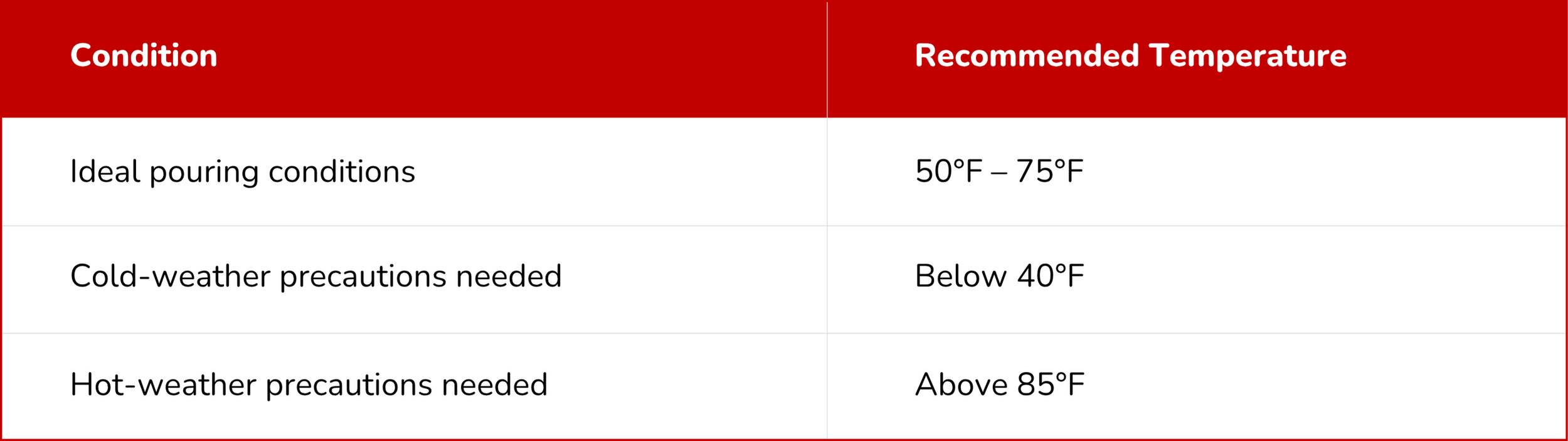
These ranges help support proper curing and reduce stress on the slab during installation.
How Rain Affects Concrete Installation
Rain does not always ruin a concrete project, but timing matters.
Light Rain Before Pouring
Moist soil can actually help support stable subgrade conditions if drainage is managed correctly.
Heavy Rain During Pouring
Rain falling directly onto fresh concrete can:
Weaken the surface
Cause scaling
Create uneven finishing
Affect appearance
Professional crews monitor forecasts carefully and adjust schedules when needed.
Why Proper Base Preparation Matters in Every Season
Weather is only one part of the equation. A driveway installed during ideal conditions can still fail if the base underneath is weak.
Proper preparation includes:
Excavation to correct depth
Gravel base installation
Soil compaction
Drainage grading
These steps help support the slab during seasonal ground movement and freeze-thaw cycles.
Many early driveway issues homeowners experience are actually related to poor preparation below the surface.
How Long Concrete Takes to Cure
Concrete reaches strength gradually over time.
General Curing Timeline
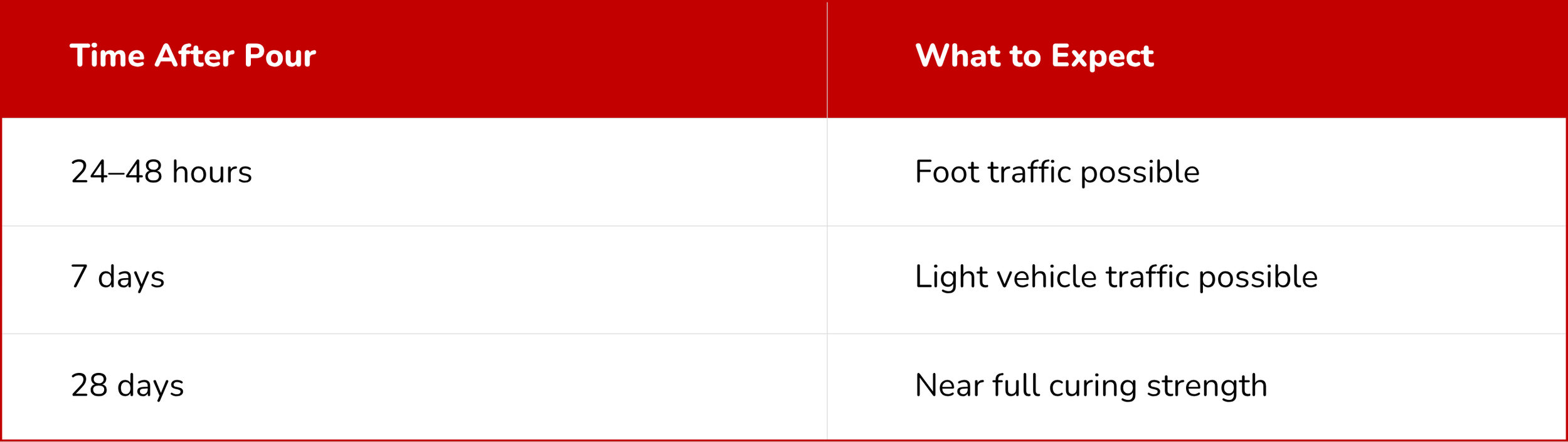
Temperature and moisture levels affect how quickly this process happens. Even though concrete may feel hard after a day or two, full strength takes much longer to develop.
Why Scheduling Early Matters
Spring and fall are often the busiest seasons for concrete contractors in Ohio.
Homeowners who wait until peak season may experience:
Longer lead times
Limited scheduling availability
Weather-related delays
Planning earlier gives more flexibility and helps avoid rushed decisions.
Should You Replace a Driveway Before Winter?
In many cases, yes.
Replacing a damaged driveway before winter can help prevent:
Water intrusion into cracks
Freeze-thaw expansion
Further surface breakdown
Drainage problems during snow and rain
Waiting through another Ohio winter with an already failing driveway often increases future repair costs.
If you are comparing materials or planning a replacement project, read Concrete Driveways in Ohio: Cost, Types, and What to Expect (2026 Guide) for a full breakdown of options and pricing.
How Professional Installation Improves Long-Term Results
The best season for pouring concrete still depends heavily on installation quality.
Experienced contractors understand:
Temperature management
Moisture control
Proper curing methods
Base preparation requirements
Seasonal adjustments for Ohio weather
This helps reduce common issues like premature cracking, uneven settling, or surface damage.
A properly installed driveway should perform well through Ohio’s changing seasons for many years.
Final Thoughts
The best time to pour a concrete driveway in Ohio is usually during spring, summer, or early fall when temperatures are more stable and curing conditions are favorable.
However, timing alone does not guarantee good results. Proper preparation, drainage, reinforcement, and curing all play a major role in how long the driveway lasts.
If you are planning a driveway project, the team at Cardinal Concrete works with homeowners across Ohio to install driveways built for local weather conditions and long-term performance. Working with an experienced contractor helps ensure the project is properly planned from the start and performs well for years after installation.