Concrete Patios in Dayton, Ohio: Cost, Design Options, and What Homeowners Should Know
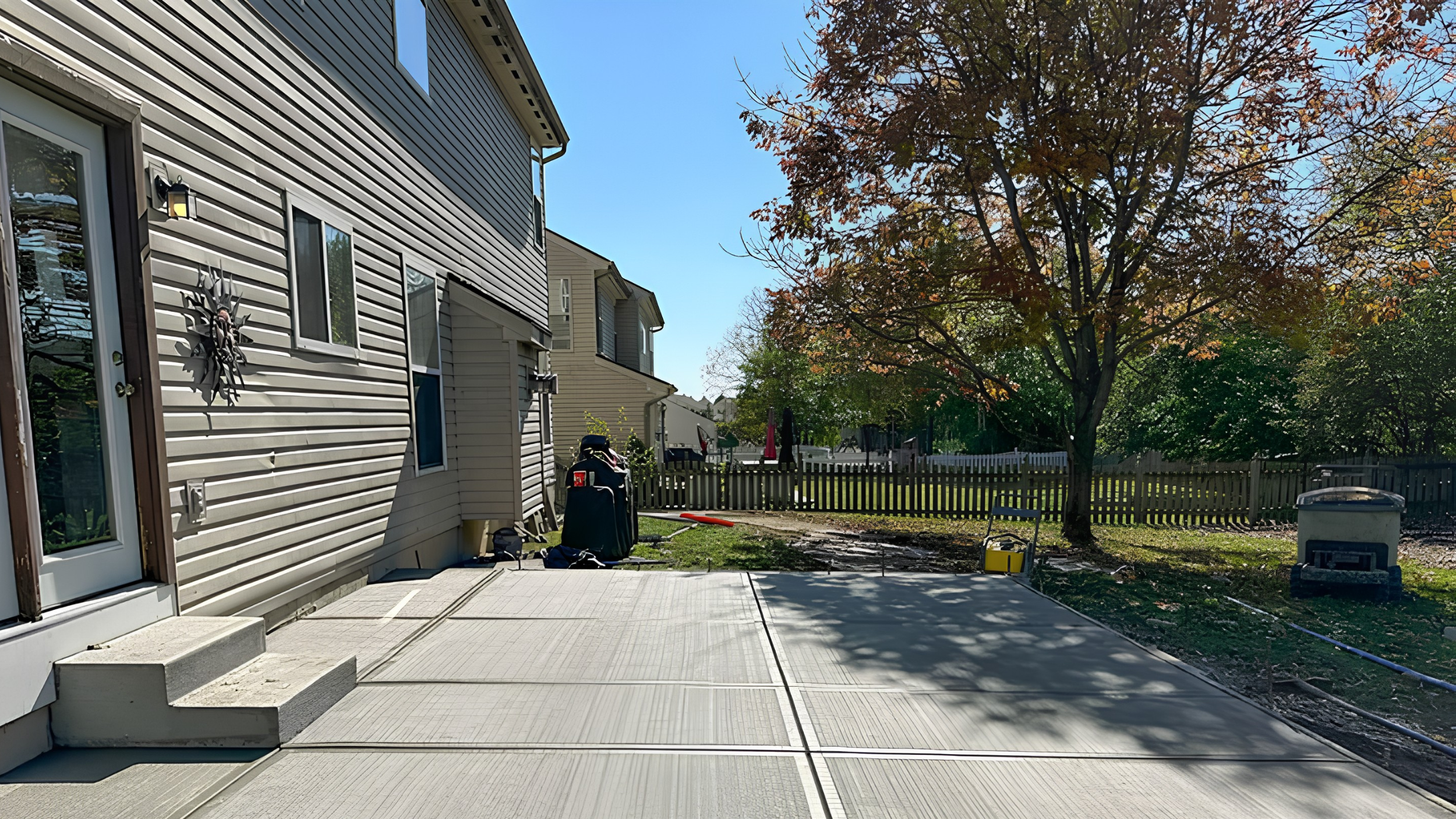
A concrete patio is one of the most practical ways to create a more usable outdoor space. For many Dayton homeowners, it adds a dedicated area for grilling, outdoor dining, entertaining, or simply relaxing without worrying about muddy grass or uneven surfaces.
If you're planning a new patio, you're probably asking questions like: How much will it cost? What finish should I choose? How long will it last? And what should I know before hiring a contractor?
This guide answers those questions and explains what affects concrete patio cost in Dayton, Ohio, the different design options available, and how proper installation helps your patio perform well for years to come.
Why Concrete Patios Are a Popular Choice for Dayton Homes
A concrete patio gives homeowners a durable outdoor living space that can be customized to match almost any home style. Whether you're creating a small seating area or a large backyard gathering space, concrete offers flexibility without requiring extensive maintenance.
In the Dayton area, patios also need to withstand changing weather throughout the year. Summer heat, heavy rain, and Ohio's freeze-thaw cycles all place stress on outdoor concrete surfaces. A properly installed patio is designed with these conditions in mind.
Homeowners often choose concrete because it offers:
Long service life
Low maintenance
Multiple finish options
Excellent durability
Strong value for the investment
Easy integration with other concrete features
Concrete also works well with future backyard improvements, including outdoor kitchens, pergolas, fire pits, and walkways.
How Much Does a Concrete Patio Cost in Dayton, Ohio?
The cost of a concrete patio depends on several factors, including the patio's size, finish, accessibility, site preparation, and overall design. The table below provides realistic planning ranges for homeowners.
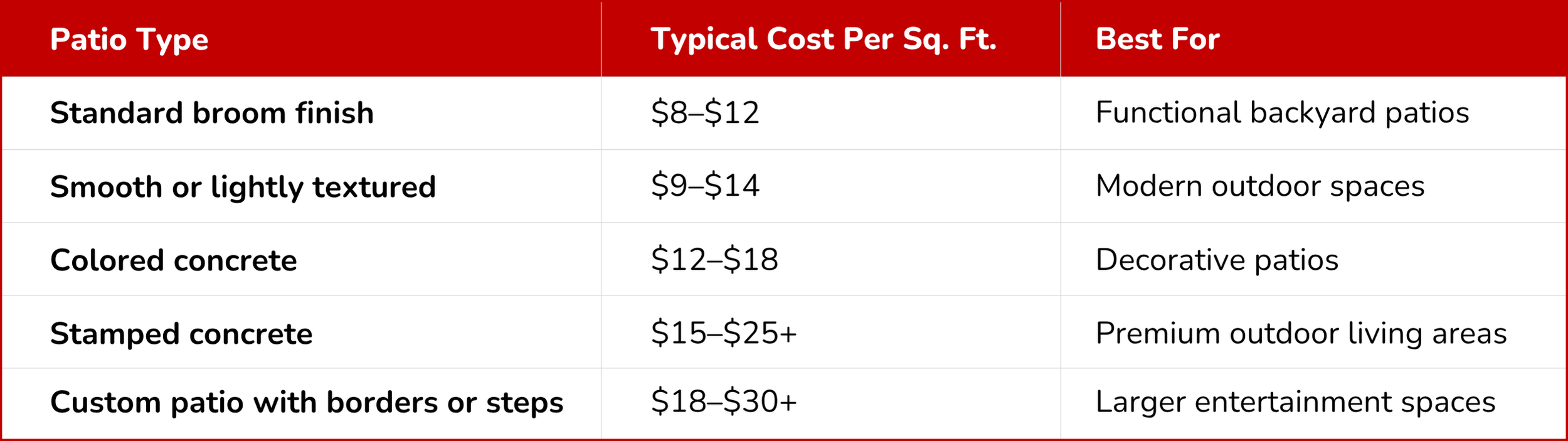
Actual pricing depends on the unique conditions of your property and the level of customization you choose.
What Affects the Final Patio Cost?
No two patios cost exactly the same. Even projects with similar square footage can vary because of site conditions and design choices.
Patio Size
Larger patios naturally require more concrete and labor. However, the cost per square foot may become more efficient as the project size increases.
Site Preparation
Preparing the site is one of the most important parts of the project.
Preparation may include:
Excavation
Removing existing concrete
Soil stabilization
Grading
Installing a compacted gravel base
Skipping these steps can lead to settling or cracking later.
Concrete Thickness
Most residential patios are approximately four inches thick, although certain applications may require additional thickness depending on how the space will be used.
Decorative Features
Design upgrades such as:
Stamped concrete
Integral color
Decorative borders
Curved edges
Exposed aggregate
all increase labor and material costs.
Drainage Requirements
Water should always flow away from your home and away from the patio surface. If grading adjustments or drainage improvements are needed, they become part of the project scope.
Backyard Access
Limited access to the backyard can increase installation time. Narrow gates, fences, retaining walls, landscaping, and steep grades all affect how equipment and materials reach the work area.
Popular Concrete Patio Design Options
One of concrete's biggest advantages is its versatility. Homeowners can choose a finish that matches both their budget and the style of their home.
Standard Broom Finish
A broom finish remains the most popular option for residential patios. The surface is lightly textured to improve traction while maintaining a clean, simple appearance.
This option is ideal for homeowners who prioritize durability and affordability.
Best for:
Backyard seating areas
Outdoor dining spaces
Budget-conscious projects
Everyday residential use
Smooth or Lightly Textured Finish
Some homeowners prefer a smoother appearance that complements modern home designs. A lightly textured finish provides a cleaner look while still maintaining enough traction for outdoor use.
Stamped Concrete
Stamped concrete allows homeowners to achieve the appearance of stone, brick, slate, or tile without installing individual pieces.
Because the patterns are impressed into freshly poured concrete, the finished patio offers decorative appeal while remaining a single continuous slab.
Stamped concrete works especially well for:
Outdoor entertaining areas
Fire pit patios
Poolside spaces
Covered patios
If you're interested in decorative finishes, learn more about stamped concrete patios in Dayton, Ohio and the different patterns available.
Colored Concrete
Color can be mixed directly into the concrete to complement your home's architecture and landscaping.
Popular choices include:
Light gray
Charcoal
Tan
Sandstone
Earth tones
Color adds character without requiring extensive maintenance.
Exposed Aggregate
Exposed aggregate creates a textured surface by revealing the decorative stones within the concrete.
Homeowners often choose this finish because it provides:
Excellent traction
Attractive texture
Natural appearance
Long-lasting durability
How Big Should a Concrete Patio Be?
The ideal patio size depends on how you plan to use the space. Here are common recommendations:
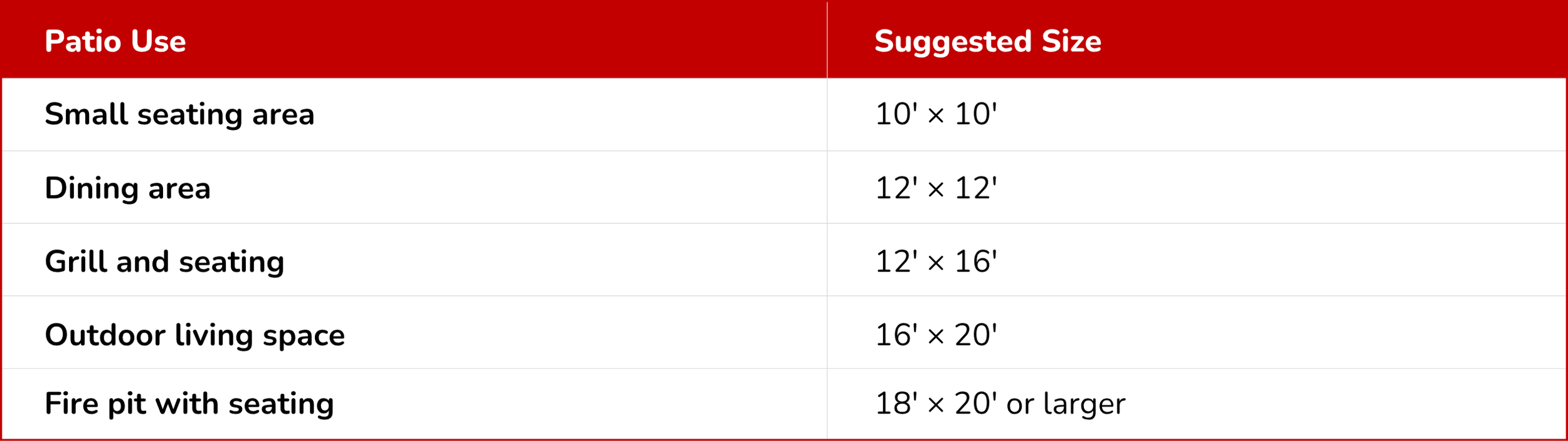
When planning your patio, think beyond today's needs. A slightly larger patio often provides much better functionality once furniture, grills, and walkways are added.
Important Planning Considerations Before Installation
The best patios are planned around how homeowners actually use their outdoor space.
Location
Consider:
Sun exposure
Privacy
Backyard layout
Distance from the house
Existing landscaping
The right location can make the patio much more enjoyable throughout the year.
Drainage
Proper drainage is essential. Water should move away from both the patio and your home's foundation. Standing water can contribute to surface wear and shorten the life of the patio.
Furniture Layout
Think about how furniture will fit before construction begins.
Allow enough room for:
Chairs
Tables
Grills
Walking paths
Future additions
This helps prevent the patio from feeling overcrowded.
Future Outdoor Projects
If you may eventually add:
A pergola
Outdoor kitchen
Hot tub
Fire pit
Walkways
it's helpful to mention those plans during the design stage. Planning ahead often saves time and money later.
How Long Does a Concrete Patio Last?
A professionally installed concrete patio can last 25 to 40 years or longer.
Its lifespan depends on several factors, including:
Proper site preparation
Quality concrete mix
Correct thickness
Reinforcement
Good drainage
Routine maintenance
A patio that is built correctly from the beginning is much more likely to provide decades of reliable performance.
Homeowners considering multiple outdoor improvements can also explore residential concrete services in Dayton, Ohio to coordinate patios, walkways, porches, and other concrete features into one project.
Concrete Patio Maintenance Tips for Ohio Homeowners
Concrete patios are relatively low maintenance, but regular care can help protect their appearance and extend their lifespan.
Keep the Surface Clean
Sweep away leaves, dirt, and debris regularly. Organic material can leave stains if it remains on the surface for long periods. For routine cleaning, a garden hose or pressure washer on a low setting is usually enough to remove dirt and buildup.
Seal Decorative Finishes
Stamped, colored, and exposed aggregate patios benefit from periodic sealing.
A quality sealer helps:
Protect against moisture penetration
Reduce staining
Preserve color
Make cleaning easier
Most decorative patios should be resealed every few years, depending on weather exposure and use.
Use De-Icers Carefully
During winter, avoid using excessive amounts of rock salt or harsh de-icing chemicals, especially on newer concrete. Sand is often a better option for improving traction without increasing the risk of surface damage.
Address Small Cracks Early
Small cracks are easier and less expensive to repair than larger structural issues.
If you notice a crack beginning to widen or collect water, have it evaluated before freeze-thaw cycles make the problem worse.
Common Mistakes Homeowners Should Avoid
A concrete patio is a long-term investment. Avoiding a few common mistakes can help improve both its appearance and longevity.
Choosing the Lowest Price Without Comparing the Scope of Work
Not every estimate includes the same level of preparation.
Before comparing prices, ask what is included in the proposal. Important items such as excavation, gravel base preparation, reinforcement, and proper drainage should all be clearly outlined.
A lower price may simply reflect fewer preparation steps rather than better value.
Building a Patio That Is Too Small
Many homeowners focus on fitting the project within a budget and underestimate how much space they'll actually use.
A patio should comfortably accommodate furniture while still allowing people to move around without feeling crowded. Planning for future gatherings or outdoor upgrades can help prevent outgrowing the space too quickly.
Overlooking Drainage
Even a beautiful patio can develop problems if water is allowed to collect on or around the slab.
Proper grading helps direct water away from both the patio and the home's foundation, reducing the risk of standing water and long-term damage.
Choosing a Decorative Finish Without Understanding Maintenance
Stamped and colored concrete offer a more customized appearance, but they also benefit from routine sealing to help protect the surface.
If you prefer the lowest-maintenance option, a broom-finished patio may be the better choice.
Not Thinking About Future Backyard Improvements
If you plan to add features such as a pergola, outdoor kitchen, fire pit, or additional walkways later, mention those plans during the design stage.
Planning ahead often makes future additions easier and helps create a more cohesive outdoor living space.
Questions to Ask Before Hiring a Concrete Patio Contractor
Choosing the right contractor is just as important as choosing the right patio design.
Before hiring a contractor, consider asking these questions:
What preparation work is included in the estimate?
How will drainage be handled?
What concrete thickness do you recommend for my project?
Will reinforcement be included?
What finish options are available?
How long should I wait before using the patio?
Is cleanup included after the project is complete?
Can I see examples of similar patio projects?
A contractor who clearly explains the process and answers your questions can help you feel more confident before construction begins.
Frequently Asked Questions About Concrete Patios
If you're still deciding whether a concrete patio is the right choice for your home, these are some of the most common questions homeowners ask before starting their project. The answers below can help you better understand costs, maintenance, durability, and what to expect during the planning process.
How Much Does a Concrete Patio Cost in Dayton, Ohio?
Most residential concrete patios cost between $8 and $25+ per square foot, depending on the size, finish, site preparation, drainage requirements, and decorative features.
How Long Does a Concrete Patio Last?
A properly installed concrete patio can last 25 to 40 years or more with proper drainage, routine maintenance, and quality installation.
Is Stamped Concrete a Good Choice for Patios?
Yes. Stamped concrete is a popular option for homeowners who want the appearance of natural stone, brick, or slate while maintaining the durability of poured concrete.
Does a Concrete Patio Need to Be Sealed?
While basic broom-finished patios may not require sealing as often, decorative finishes such as stamped, colored, and exposed aggregate concrete should be sealed periodically to help protect the surface.
What Is the Best Finish for a Backyard Patio?
A broom finish is the most practical choice for homeowners looking for durability and easy maintenance. Decorative finishes such as stamped or colored concrete are ideal for those who want a more customized appearance.
How Long Before I Can Use My New Patio?
Most patios can support light foot traffic within 24 to 48 hours. Heavy furniture and regular use should wait until the concrete has cured according to your contractor's recommendations.